
5 Easy Design Tips and Tricks For Any Home
Design shouldn't feel daunting, today we are breaking down 5 of our favorite design tips and tricks that we incorporate throughout our projects. These are easy to implement and can make all the difference in your home!
Keep reading for some of our go-to design tips.
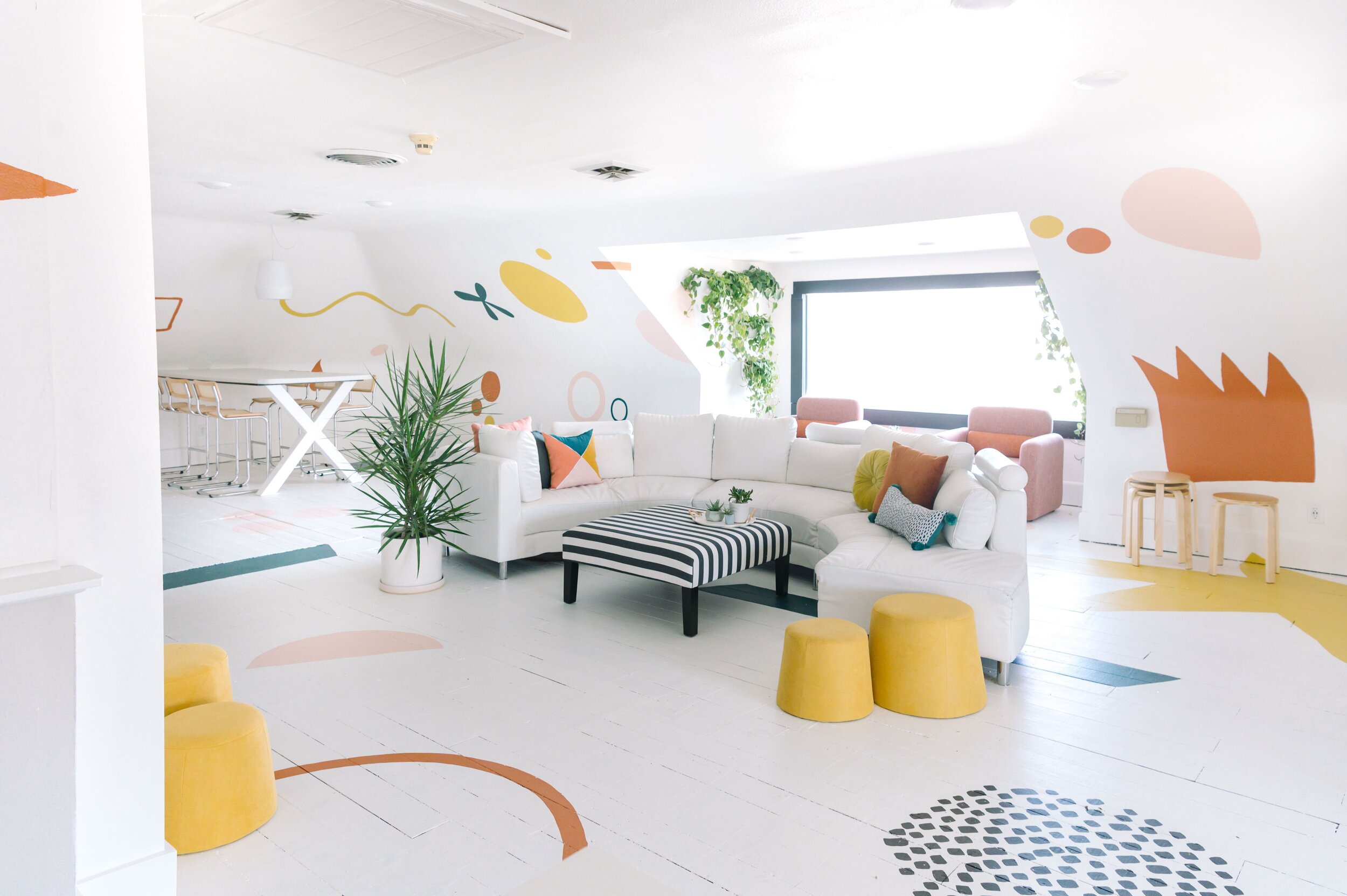
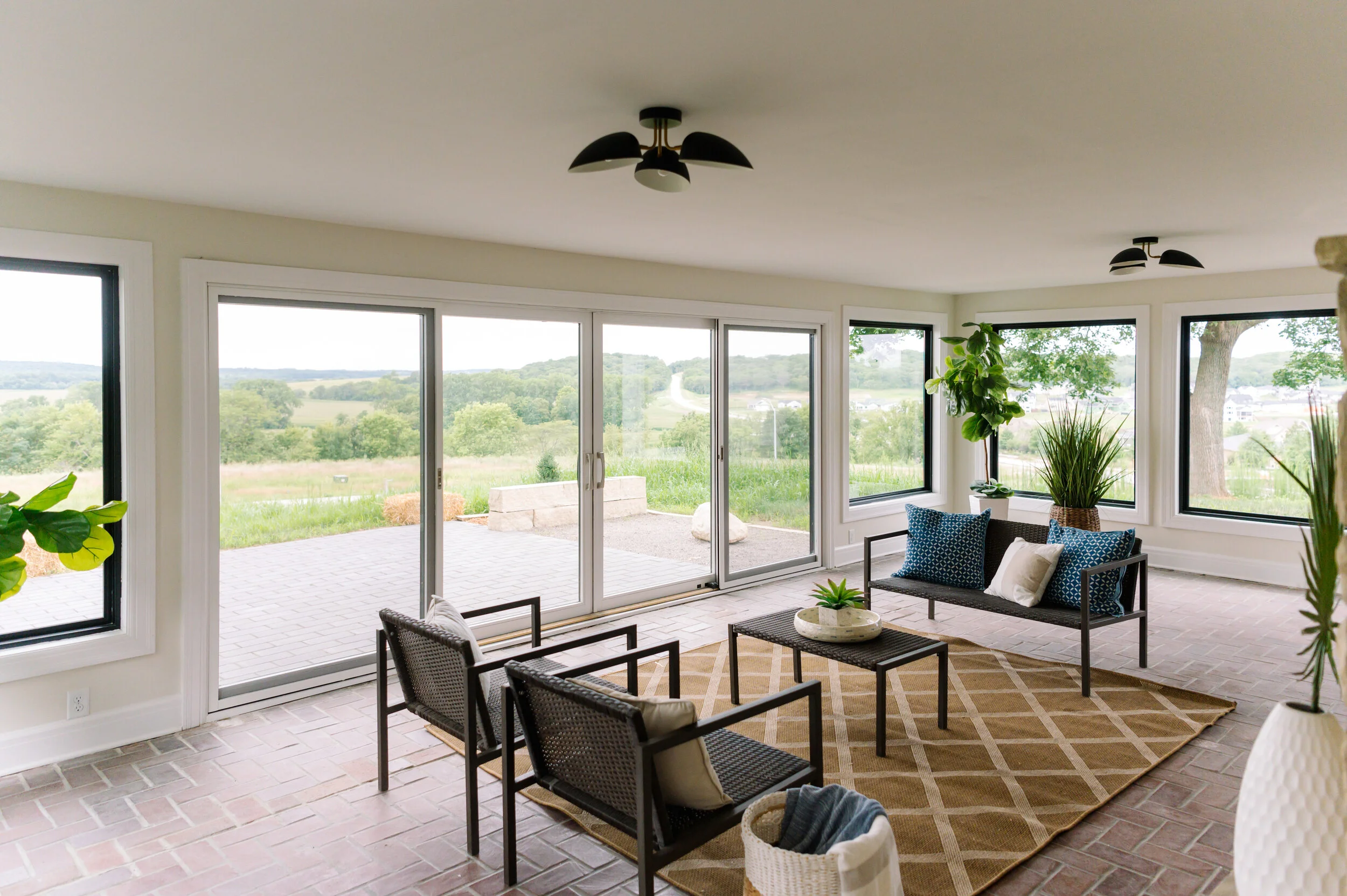
Every Room Needs A Focal Point.
Focal points draw the eye in, they create interest in a room, and they also give your eyes a place to rest. A focal point in a room can be anything from an accent wall, to a large art piece, to a statement rug. Perhaps the focal point of your room may already be an original element of your home. For example, you may have a brick fireplace in the heart of a room that can be updated and implemented as the focal point!

2. Space Zoning.
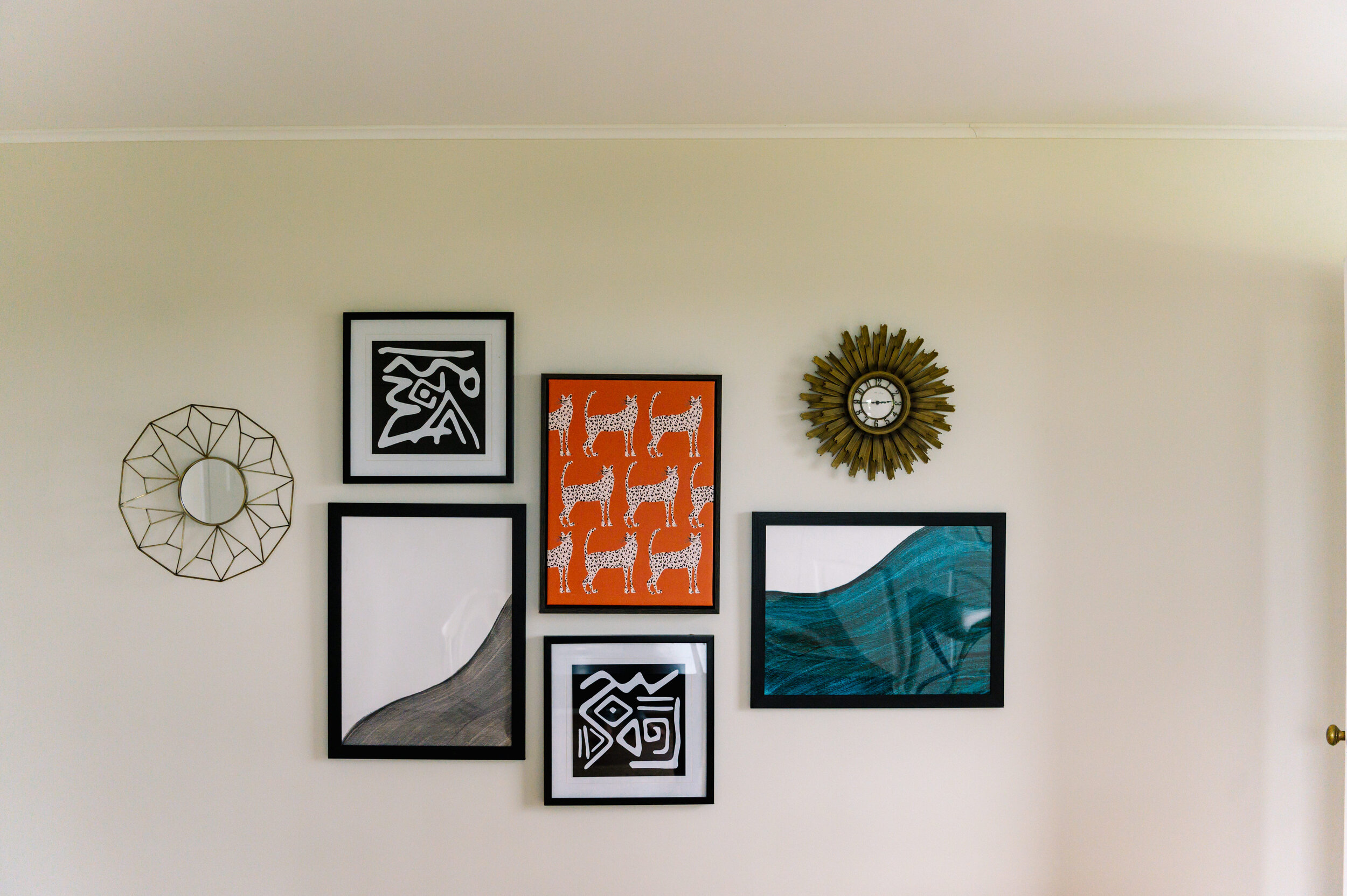
While designing a room it is important to establish room function. One easy trick to designing small spaces is to remember to create “zones”. These are furniture grouping areas that feel separate but still cohesive to the rest of the room. One of our favorite ways of creating zones is by layering rugs for reading nooks/seating areas, console tables for drop-zones, and benches to divide living room-dining etc. Creating zones in a space helps establish seperate functions but creates unity.
3. Establish Your Traffic Areas.
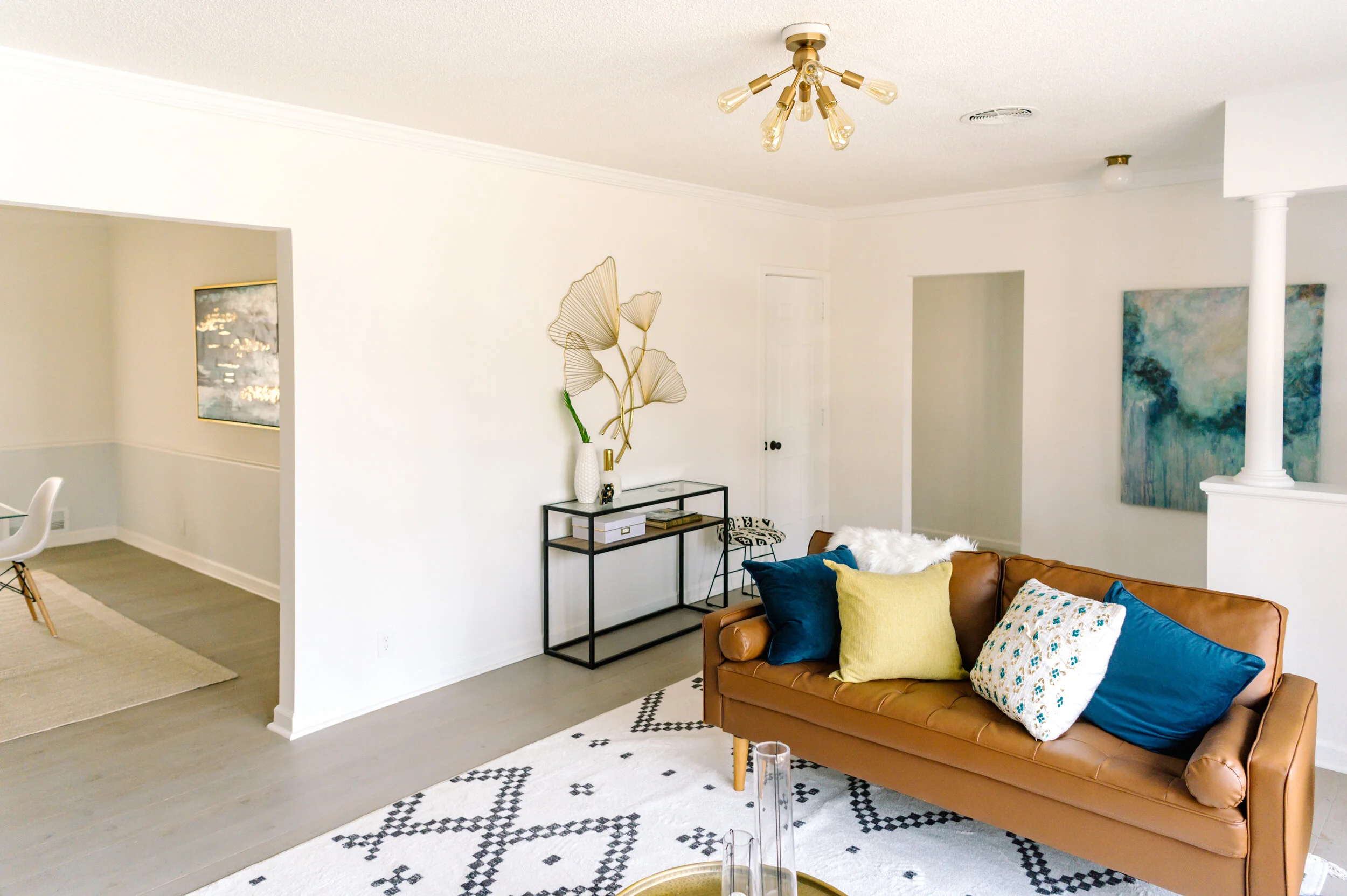
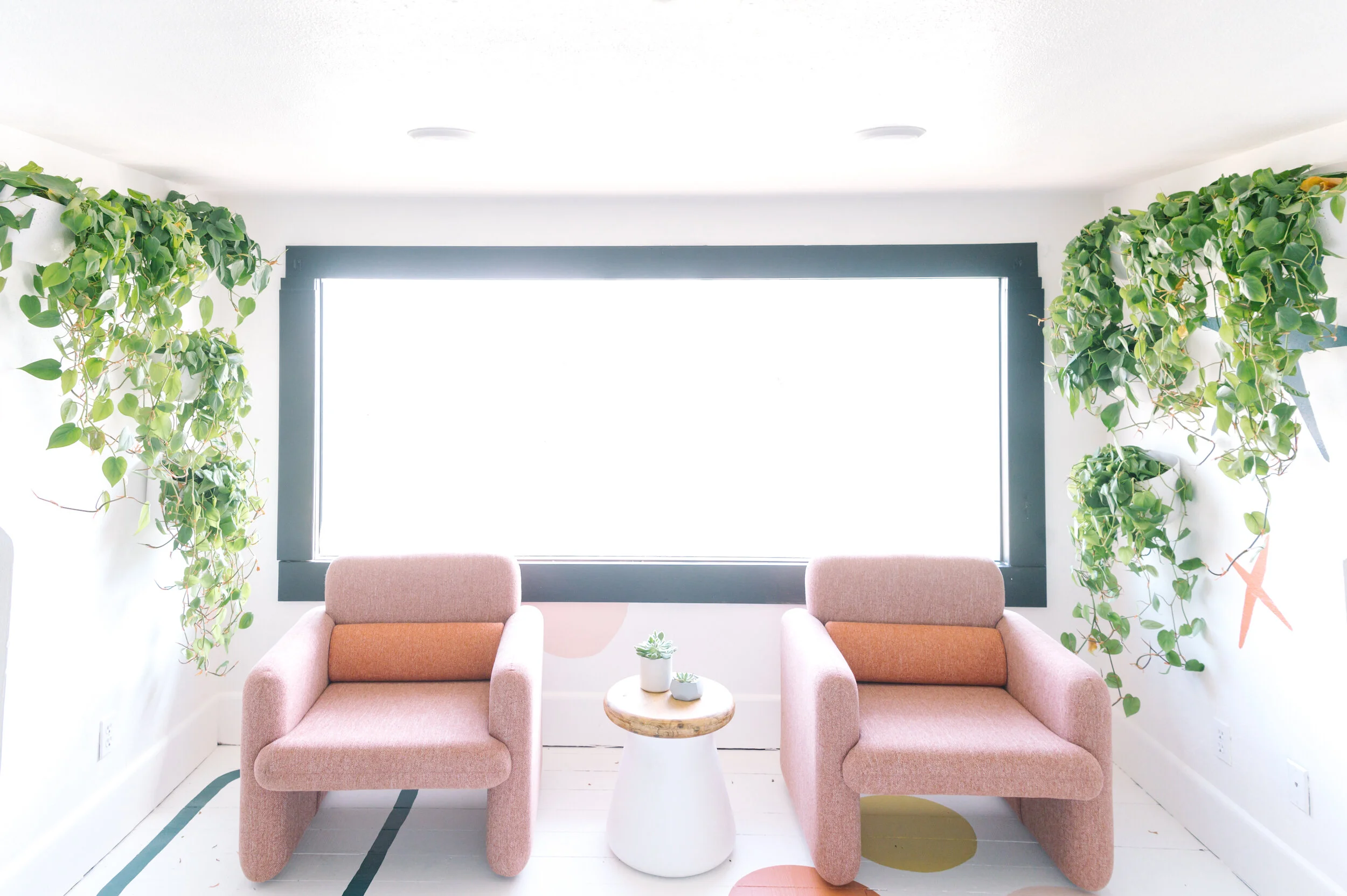
This is what we call the “flow” of a room. When designing a space, we like to imagine high traffic zones, and find the best ways-in and out of rooms. Making sure you establish clear traffic zones first, helps determine the best placement for your furniture, which creates an overall sense of “flow’ in a room!

4. Finding the harmony.
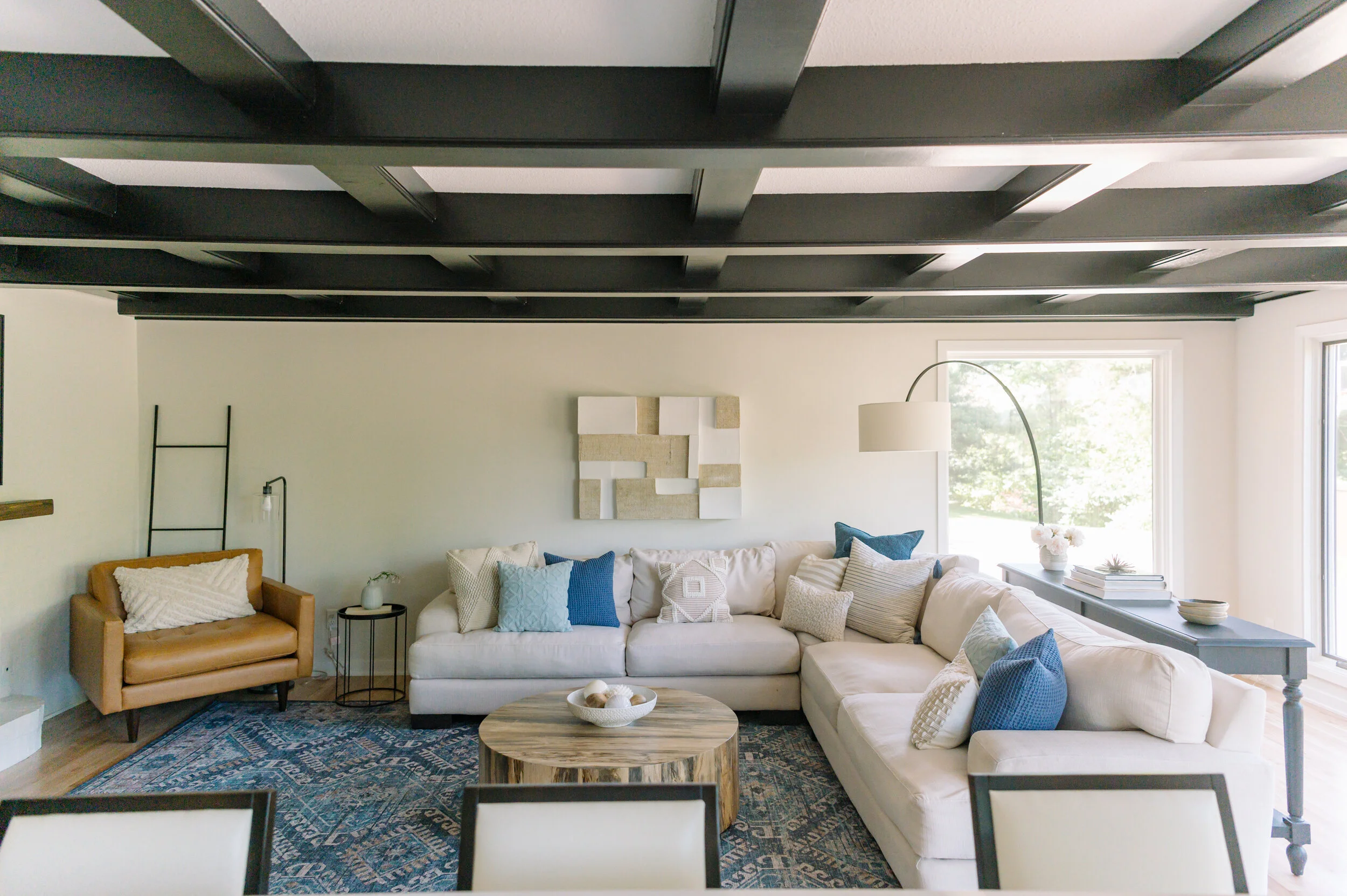
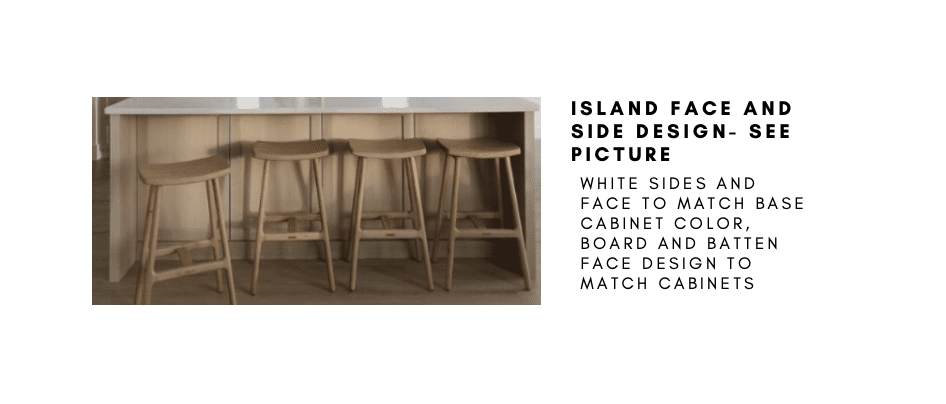
In any design, it is important to use a cohesive colors and textures. This is especially true when trying to find the perfect balance of neutrals and warmer, richer tones. There are many ways to blend these two concepts, but one really good example of this would be to contrast a blue rug (cool tone) with a leather accent chair. A kitchen island can be crisp white but contrasting that with warmer cabinets or shelving can bring that perfect harmony into a space. Balancing these two can be tricky, but don’t be afraid to try different hues of cool and warm.
5. Photo Finish
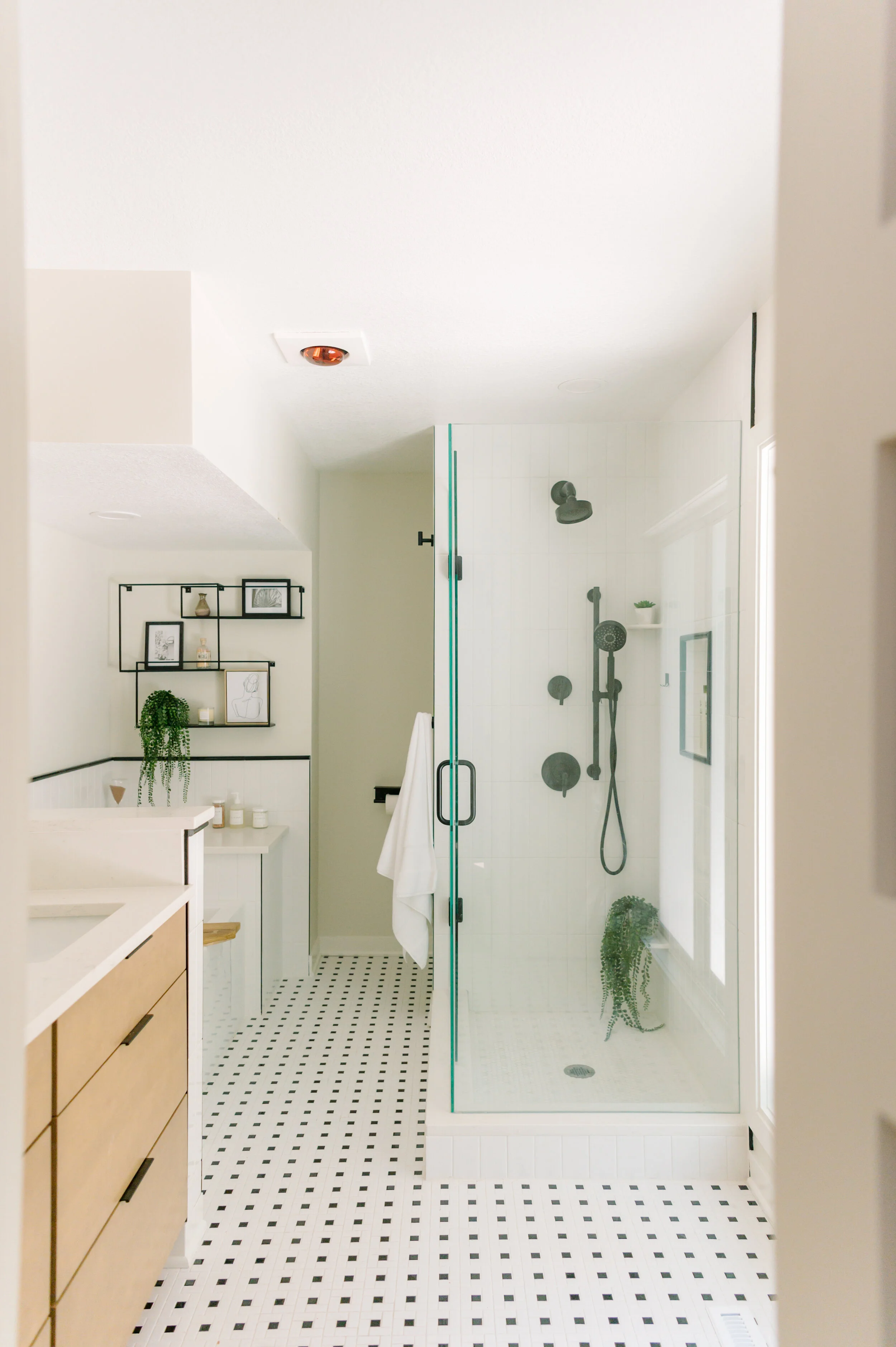
Whether we’re designing an entire home or doing a one-room update, we’re always thinking about how we can carry cohesive elements throughout a home. One of the many ways we do this is by telling a color story via artwork, pillows + accessories, or metal finishes. One helpful tip is to think of each room as a part of a whole.
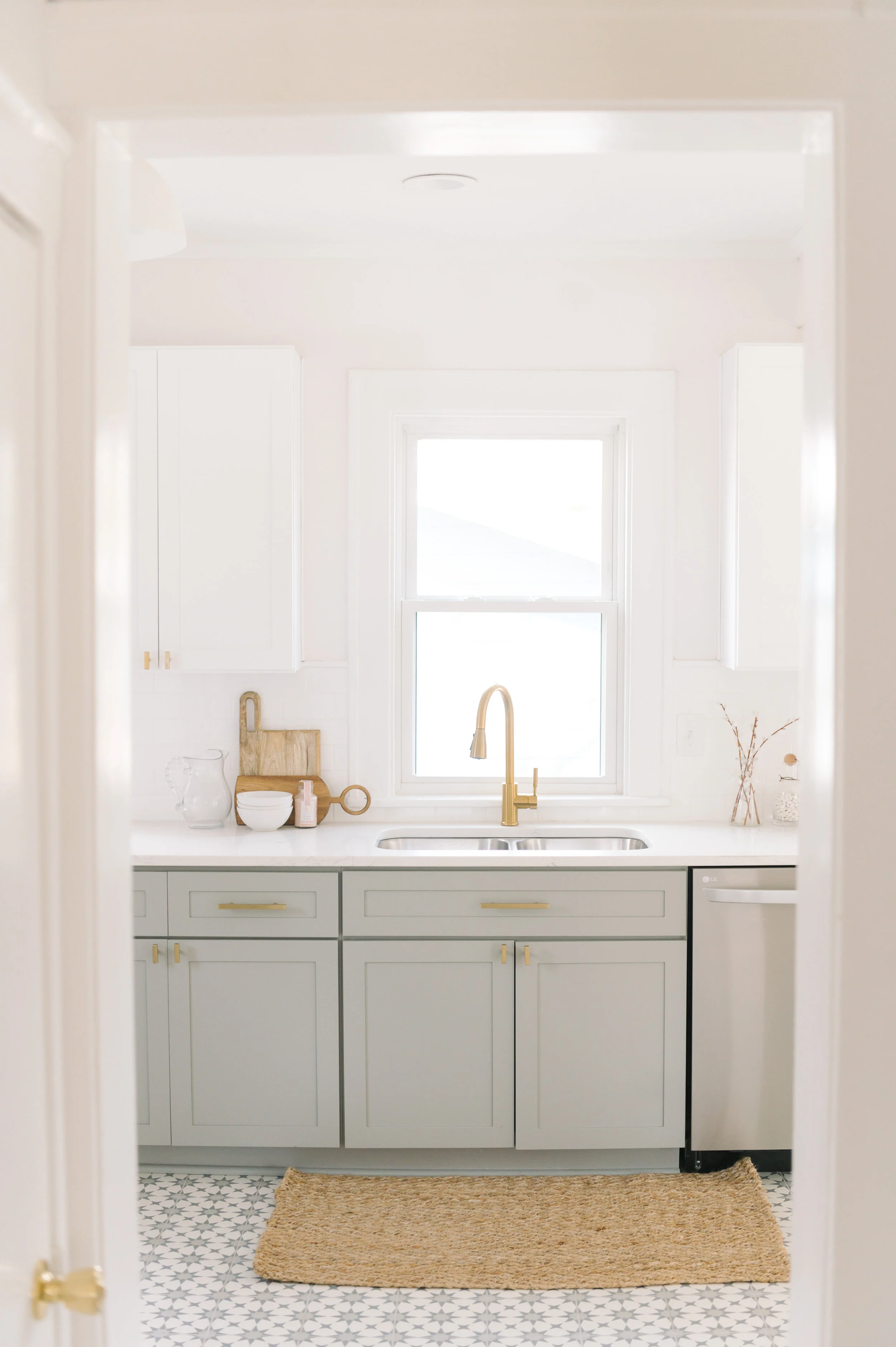
When designing kitchens, we will often carry hardware or appliance+ plumbing finishes to the rest of the house. Although two rooms look completely different, that repeating element ties them together!
There you have it! 5 easy tips for designing any home. We hope that these will be a guide for your next home project and stay tuned for more helpful tips and tricks from us!
The Modern Mediterranean Kitchen Edit
Happy November everyone! This week we wanted to share a few progress pictures of a home project we started back in August. We partnered with Kruse Development for this beautiful modern Mediterranean home located in Norwalk.
We had this idea of a Mediterranean inspired kitchen but with modern functionality, so that's where we took it. When designing a kitchen, I think it's really important to list out your top priorities and then work from there. For us, having a unique backsplash tile and a large kitchen island were top priority.
Inspiration

Via Pinterest

Via Pinterest
We really wanted a big modern wood hood in the kitchen, so we did a custom square hood. We love the instant touch of elegance and sophistication that it brings to the kitchen.
Kitchen progress
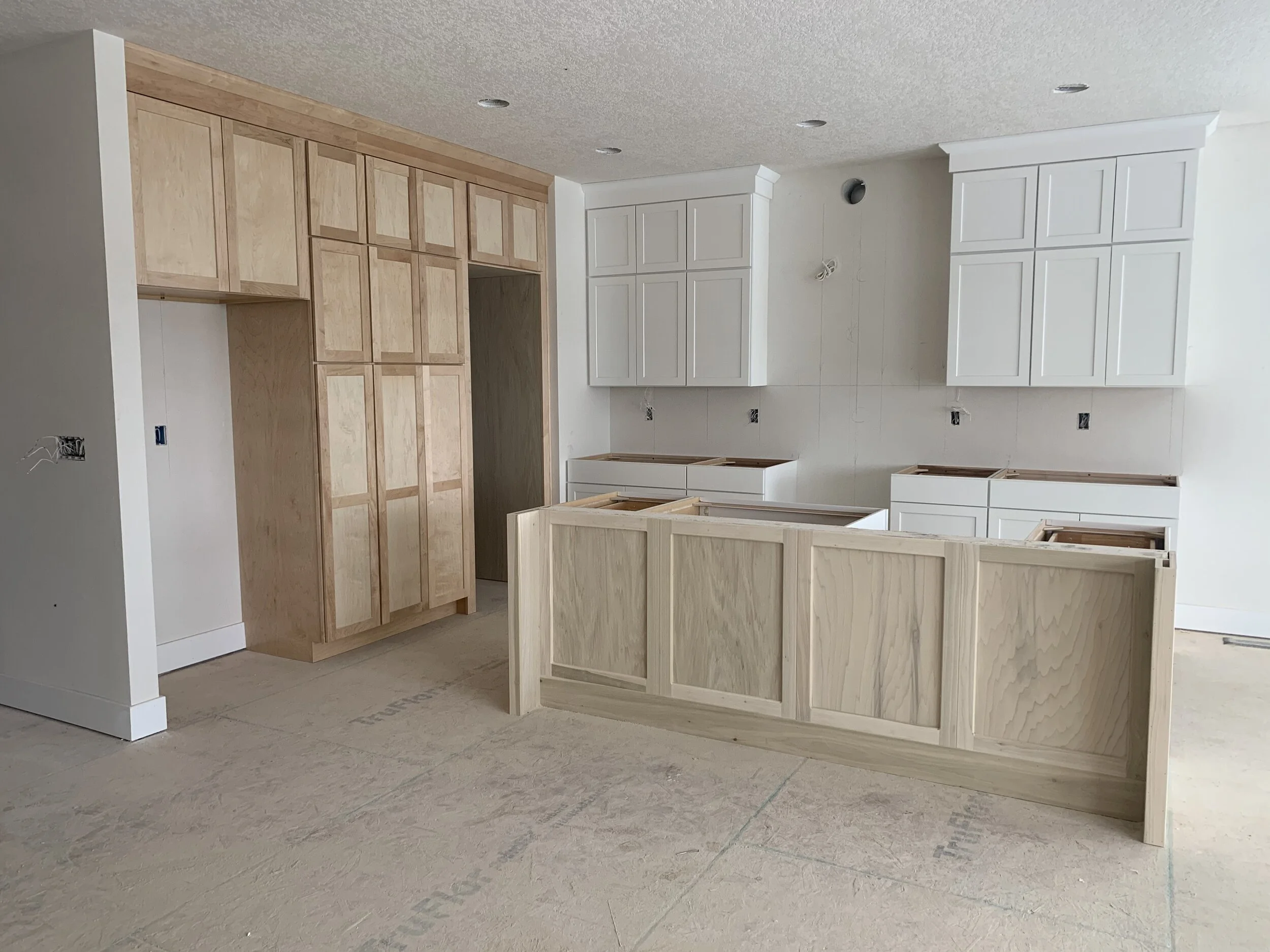
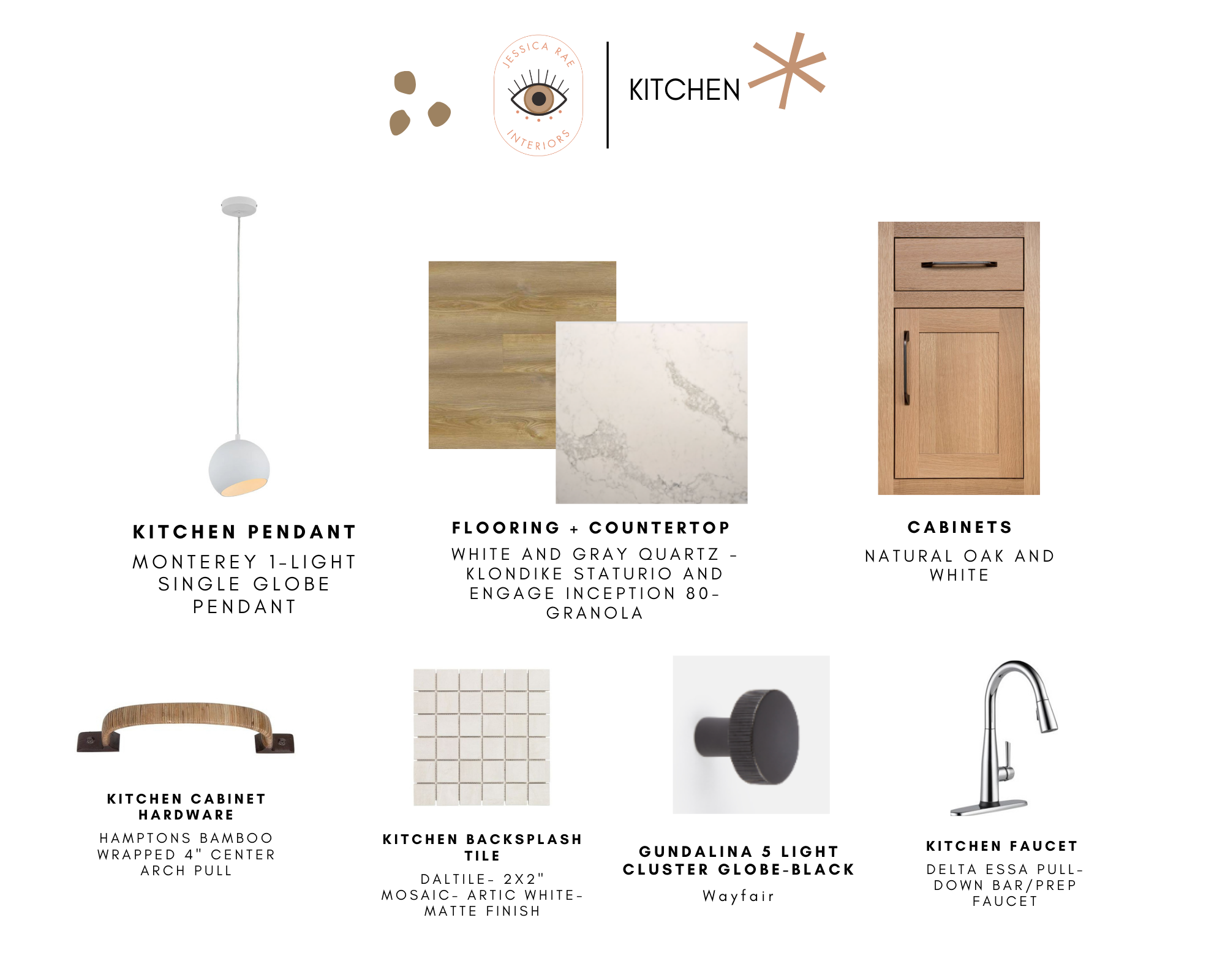
When it came to the cabinetry design, we wanted a shaker detail, and then we added bamboo wrapped 4” arch pulls to the doors and drawers. We selected a white oak and white cabinets mix to bring the Mediterranean warmth from the wood into the kitchen.


We will be posting more of this house on the blog as it becomes more finalized. And of course, we will also be sharing the final staged pictures! So stay tuned for that!

Designer Diaries: Creating a Cohesive Color Story
So you’re ready to design your dream home or perhaps the empty walls in your living room are driving you insane. You are ready for a change, but you’re not sure where to start. Perhaps you saw an accent wall on Instagram or Pinterest that you really like, but you’re not sure if it’s really you.
Color expresses messages, sparks interest, and generates emotions, so whether you’re conceptualizing a home or just updating your wall paint, choosing a color palette that represents you, is one of the most important parts in the design process.
Today we are showing you how to create a cohesive color story that flows naturally throughout your home!
Find what inspires you.

Inspiration is everywhere around us! Sometimes what sparks an idea is an every day item like a magazine or something we see out in nature. We love finding inspiration in the landscape around us and we often borrow color palettes that are naturally colorful.
Online is a great place to look for Inspiration. Blogs, magazines, social media, and Pinterest are our go-to places when we are looking for a muse for our next project. Whichever way you find your inspiration, make sure you have multiple sources and plenty of options to go off of!
Use a color picker app.

Via Pinterest
If you’re designing with a photo, using a color picker app is an easy way to find color inspiration. Take your design and sample colors from the photo to match.
Create a mood board.

Via Pinterest
Once you found your inspiration, don’t be afraid to start pulling everything together into one place. That place can be a Pinterest board, a folder in your phone, or a physical board with textiles, objects, paint swatches, or anything else you love. Being able to see everything in one place will not only help you visualize your idea but also create a common theme. That theme can be a common color, texture, or maybe a pattern.
Pick Your Color Swatch.

Via Pinterest
Once you have a general idea of what your desired mood is, go ahead and start pulling actual color swatches. For example, get a physical Sherwin Williams paint sample to give you a better representation of your desired color. A paint we use in our next project can sometimes come from a flower bouquet or another natural element.
Don’t be afraid to start over.

Finding the right color story that is as unique as you can be difficult and often times we end up saving things we love, but doesn’t really fit our story. After all, design is a process of elimination and finding the right color is no different. It’s okay to take a step back, and take away anything that does not align with your commitment level. For example, black is a popular accent wall color but it is also high commitment. Perhaps a darker grey is something more on par with your comfort zone.
Put you ideas to work.

This is the last step of the process, now it's time to make your color come alive! Depending on what you're creating, this may look like pulling decor pieces, pillows, art, or choosing paint colors!
You should have the foundations for a beautiful color palette that represents you, and what you want to tell the world! Remember, letting creativity guide your process always lends the best results.